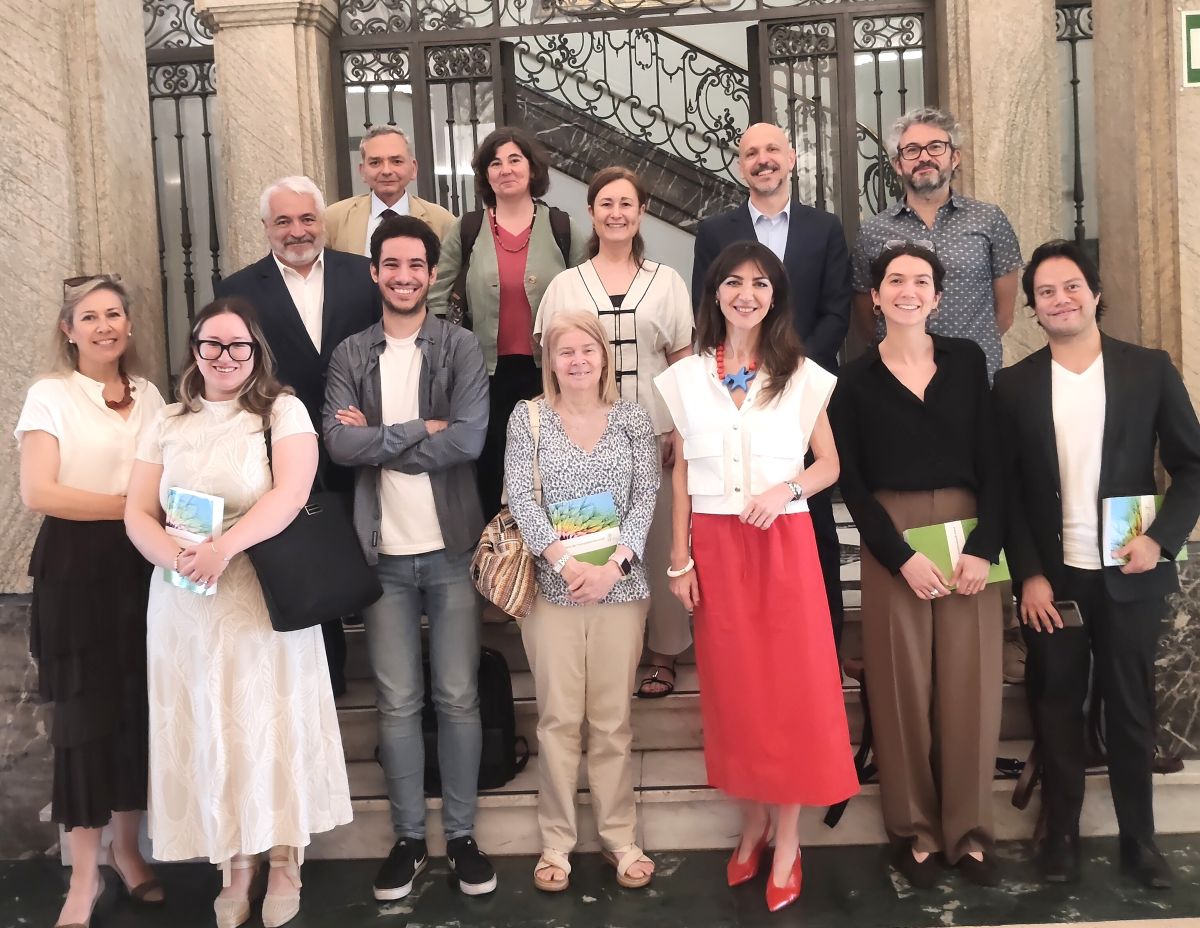
The management team of the Council of Transparency and Good Government, headed by its president, Concepción Campos Acuña, held on Friday, May 9, a meeting with various civil society organizations working in favor of the right of access to public information and institutional transparency.
The President of the Council thanked the representatives of the participating associations and foundations for their presence. Campos expressed his desire to strengthen the ties of collaboration and establish fluid communication channels with civil society, which he considers an essential ally to consolidate and advance a culture of real and effective transparency in public administrations.
The meeting was attended by representatives of Access Info, the Association of Spanish Archivists in the Public Service, the Fundación Civio, Hay Derecho, the Fundación Maldita and Transparency International. The organizations were able to share different initiatives that they are developing to promote the right of access to public information, make it easier for citizens to exercise it and promote transparency in key areas.
The difficulties in the exercise of this right were also addressed, and all parties agreed that it is necessary to combat, such as administrative silence in the face of requests for information, the lack of compliance with Council resolutions by the requested bodies, or the lack of adequate document management by the Administration as an essential basis for achieving transparency from the design.
“One of the horses of battle that I want to fight is administrative silence,” the president said, recalling that, in 2025, 45.5% of the state-level claims resolved by the Council were presented by administrative silence, a percentage that reached 75.3% in the autonomous and local areas. “And our goal, since we cannot sanction or impose coercive fines to enforce all our resolutions, is to help the Administration comply and to encourage active advertising,” he added.
The colloquium highlighted the importance of transparency in combating opacity and corruption, and allowed for an exchange of perspectives and needs that enriches the Council’s vision of the current challenges in this area.
For its part, the Council presented to the participating organizations some of the main projects that it currently has in development, such as the elaboration of its Strategic Plan 2027-2030, which will be subject to a period of public information so that any person or organization can make contributions.
The Council is also working on a review and updating of its interpretative criteria for the Transparency Act, in order to adapt them to current challenges, casuistry and jurisprudence. Some of them will work with other institutions, such as the Spanish Agency for Data Protection or the Spanish Agency for Artificial Intelligence Supervision.
This networking meeting reflects the new Presidency’s commitment to ongoing dialogue, exchange of perspectives and collaboration with all key actors from different sectors working to promote transparency, the right of access to public information, accountability, and open government.
The meeting was attended by Beatriz Macho, legal adviser to Access Info; Elisa Avilés, vice-president of the Association of Spanish Archivists in the Civil Service; David Cabo, co-director of the Civio Foundation; Elisa de la Nuez, general secretary of Hay Derecho; Álvaro García, editor at Fundación Maldita; and Transparency International España, its executive director, David Martínez, and Cristina González.
On the part of the Council, in addition to its president, the Deputy Director General of Transparency and Good Government, Gonzalo Gómez, the Deputy Director General of Claims of Autonomous Communities and Local Entities, José Manuel Jover, the Secretary General, Isabel Lombardero, the Director of Cabinet, Isabel Jiménez and the Advisory Member, Enrique Orduña.