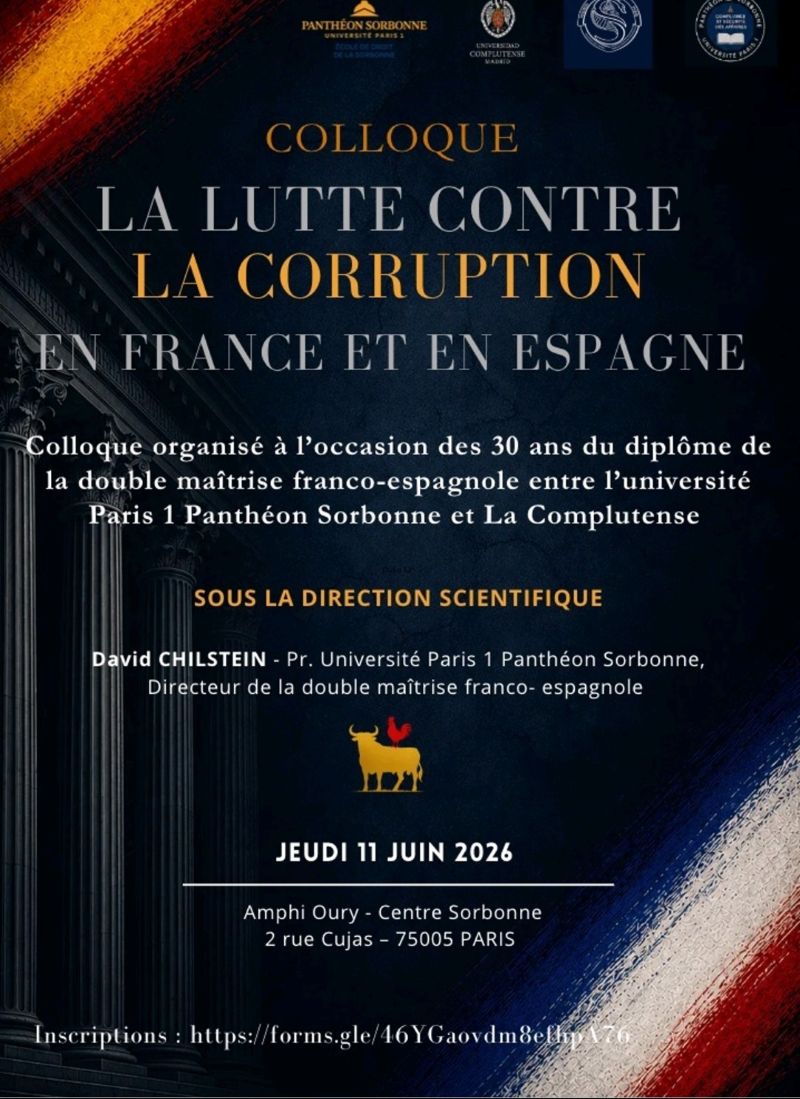
The colloquium was organized by the Criminal Law Research Department of the Sorbonne de Paris, on the occasion of the 30th anniversary of the French-Spanish Double Master’s Degree between the French and Spanish universities. University Paris 1 Panthéon-Sorbonne and the Universidad Complutense de Madrid.
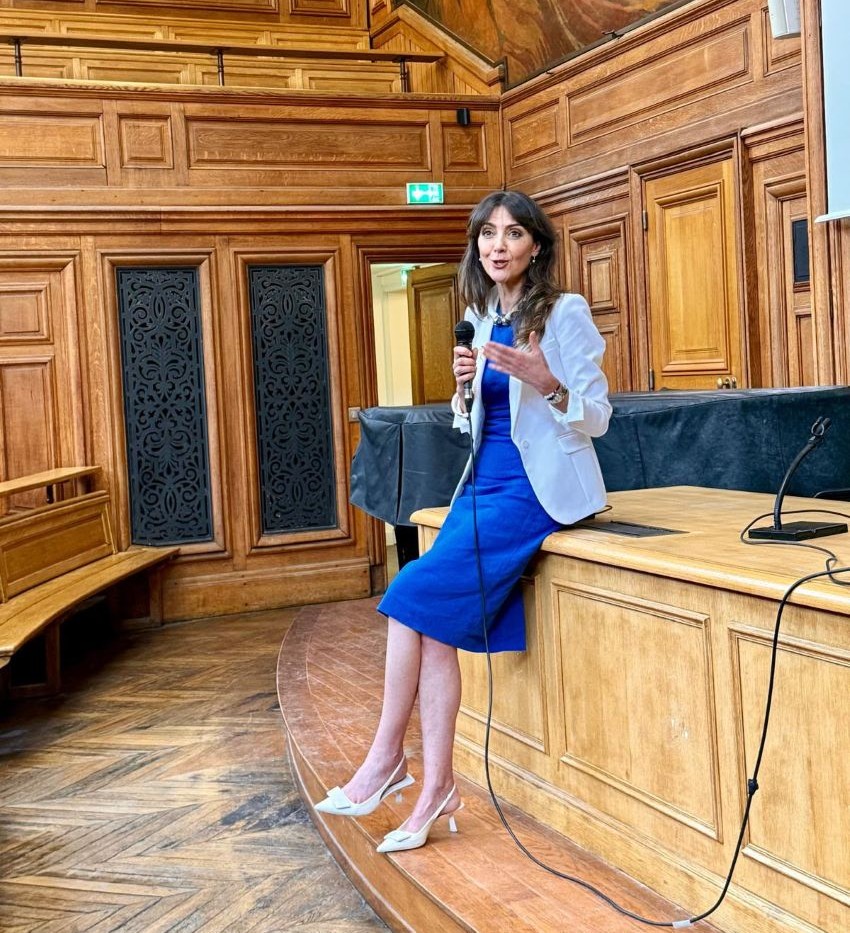
At his conference, entitled “Transparency as an instrument for preventing and combating corruption”, Campos stressed that transparency “does not act when the damage has already been done; it acts by creating an environment in which it is much more difficult to hide irregular behaviors, and generates incentives to act correctly even before any control body intervenes.” When public decisions are visible, it incited, the spaces of opacity decrease, the traceability of actions increases, the opportunities for favoritism are reduced, social and institutional control is facilitated and public confidence is strengthened.
Transparency, he stressed, has a triple effect:
- Deterrent, since “those who know that their decisions are public, make better decisions. Transparency modifies behaviors before the damage occurs.”
- Of detection, since “active advertising allows journalists, civil society and control bodies to detect anomalies that opacity conceals”.
- Transformer, because “when transparency is normalized, organizational culture changes; when an organization knows that its decisions will be public, documented and scrupulous, behavior changes. Accountability goes from a legal obligation to an institutional practice.”
Therefore, “transparency must no longer be seen as an administrative burden. It must be understood as a strategic investment in democratic quality,” he concluded.
In the session, the attendees were able to know the functions and the relevant role played by the Council to promote and evaluate institutional transparency and to guarantee the right of access to public information of the citizens.
During the day they also intervened David Chilstein and José Carlos Cano, co-directors of the French-Spanish dual Master’s programme at the Université Paris 1 Panthéon Sorbonne and at the Complutense, respectively; Richard Martínez, State administrator and former adviser to the French Anti-Corruption Agency; Stéphanie Domínguez, director of ACTUO; and Raquel Montaner, director of the Postgraduate Degree in Compliance of the Universitat Pompeu Fabra.